

Neither Here Nor There
Default in our stars.

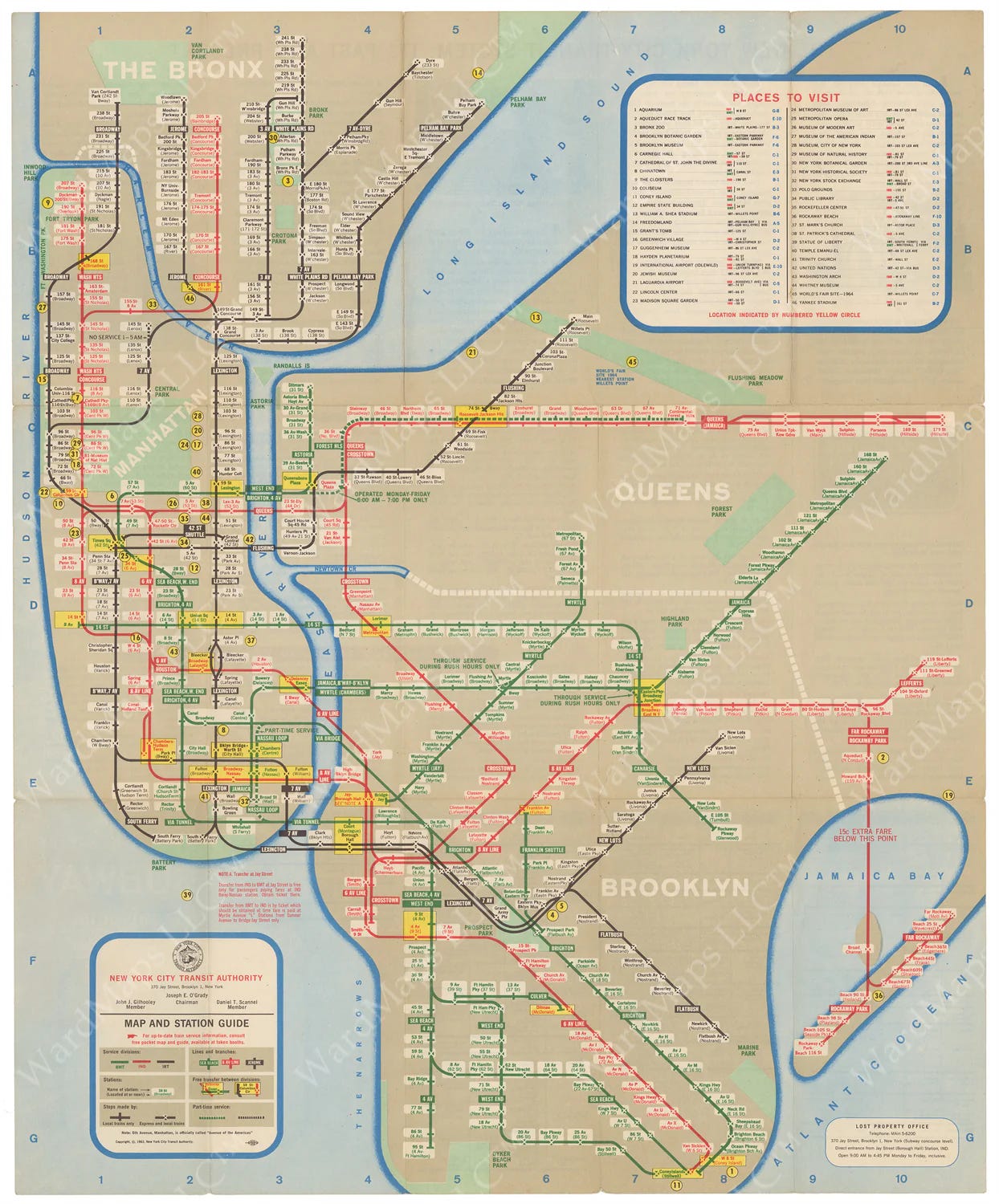
My childhood was a back-and-forth affair. My parents were divorced. My mom had won custody, so that my dad only had me every other weekend. Every other Saturday morning he’d pick me up from Mom’s apartment in Washington Heights, near the northern tip of Manhattan, and we’d take the train together to his place on the Lower East Side, near the southern end of the island. On the subway ride I loved standing at the very front of the train. As it raced through the tunnels and stations, I pretended I was the engineer — pressing various screws and bolts on the front door and imagining that it was I who had the power to make the train go and stop. Of course I knew that I wasn’t really the driver, but this game filled me with a sense of mastery: I, a four-year-old, was taking all these commuters where they needed to go. On the somber ride back to Mom’s on Sunday evening, after a joyful two days in Dad’s raucous tenement apartment (he encouraged me to draw on the walls), I’d again pretend I was piloting the train — my last chance to experience a giddy sense of control before being returned to Mom’s quiet pad, where the rule was that “children are meant to be seen but not heard.”
On the non-Dad weekends my mom generally took me with her to shop for her clothes at the great department stores of Herald Square. Mom was mostly a bus-rider — and again, on these long rides I’d imagine I was really driving the bus. My favorite spot to do this was in the seat at the very front, just behind the actual driver. The driver had this kind of pull-down shade behind his or her seat, providing a bit of privacy. The shade was secured by two little flat metal twisty things at the bottom that went through small slots. I treated these as the bus’s controllers — much like the controller wielded by the little boy who guided the robot in my beloved Gigantor cartoons. The left-side twisty thingie could make the bus stop, start, and speed up; the right-side one was responsible for turns — and also for opening the front and back doors so people could get on and off. I was very important!
One day I was riding with my mom on the No. 4 bus, twiddling as usual with the twisty things, when by accident I twisted both of them so their flat sides aligned with the slots they went through. Shockingly, this released the divider-shade behind the driver so it suddenly snapped all the way up, exposing him to the rest of the bus. We were at a stoplight, and the driver turned around to glare at the meddlesome kid. I burned with embarrassment, and slunk back to sit with my mom, who registered mild disapproval as she continued to read her New York Review of Books. I wanted to tell the driver that I hadn’t meant to surprise him — that I was just playing my little private game — but he didn’t look like he was in any mood to hear my explanation.
So for the remainder of the ride I just returned to my normal activity while riding in between places: daydreaming. And while I daydreamed I unconsciously rubbed my fingers together, sometimes also running my tongue across my lips. I was in a kind of ecstatic state — which was also my survival mode, during the long periods when I was meant to be seen but not heard.
One day my mom happened to notice me doing my private daydreaming-and-finger-rubbing thing.
She said, “I think you might have a neurological problem.”
I didn’t — but much later in my life, when I was a fellow at the Global Brain Health Institute at UCSF, I learned about the default mode network: the mode we humans go into when we have nothing in particular to do and our mind just wanders. When we daydream. Turns out this is one of the most important neural networks — a big part of what makes human beings what we are.
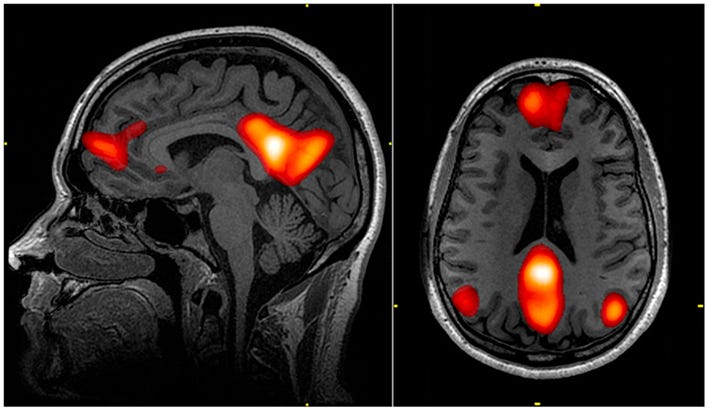
We need to daydream.
The next weekend, Dad and I went to the Hayden Planetarium. These visits always put me into a state of awe: It was a revelation to be shown all the shining celestial bodies that were normally hidden by Manhattan’s smog and light pollution. It was — even for us communists — something akin to being in the presence of holiness.

Afterwards, as Dad and I waited on the subway platform, I said to him, “Daddy, what if there’s a God?”
“There is no God, my son,” he said, patiently. “We’ve been over this. It’s up to their side to prove God’s existence, and they haven’t.”
I considered this as an express train rattled through our (local) station.
Eventually I said, “But what if there were a God? What would God be?”
Dad thought about this for a time. Then he said, “Well, I supposed if God did exist … God is said to be all-knowing and all-powerful. And all the human beings on Earth, collectively, would be all-knowing and all-powerful. So I guess God would be all the people on Earth, if only we’d all work together.”
These days I’m still struggling with the remnants of depression: physical weakness and difficulty concentrating. This may or may not have something to do with the meds I was taking. Until I get better, I must simply wait.
We live now in a moment when we are neither here nor there: neither a vibrant, functioning democracy, nor (at least for the more fortunate) totally under authoritarian rule. As we actively resist together, we also need to keep daydreaming about a better future — a democratic future, a loving future.
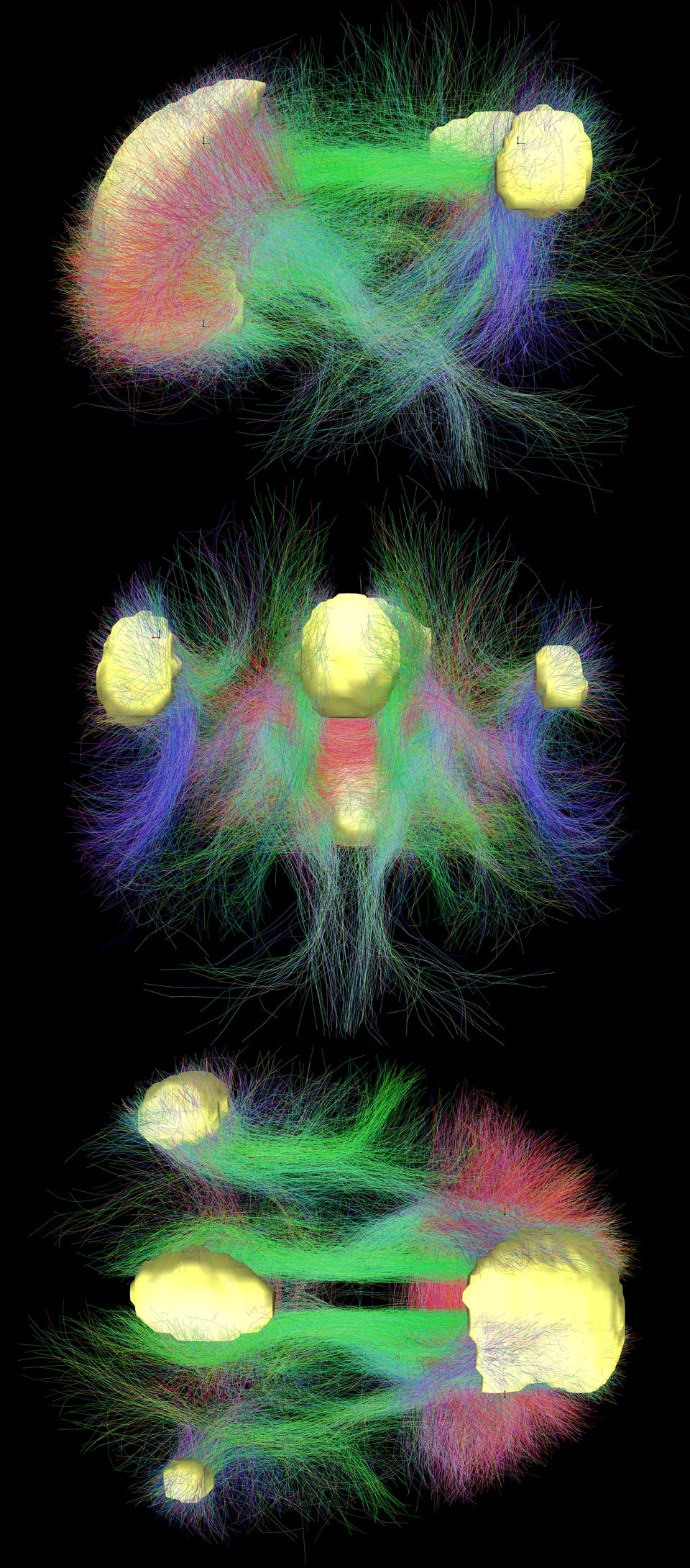
Such a tremendously difficult state of mind to maintain! Especially in these times of great suffering and loss: times that are not conducive to activating our default mode network. We need to keep feeling awe. We need to lean on one another. We need to celebrate our wins. We cannot let them steal our joy.
Onward, in power, into the unknowable future!
Performance note: No performances of What Is To Be Done?: Fighting Fascism and Depression this holiday weekend. Next show on Friday, July 10. Tix & info here.
Josh you bridge humanity and science like no one else. Your default mode network is well-oiled and wonderfully unique. Keep revealing to us the secrets from your brain.
As usual Josh, I love your story! And the connection to our need to daydream, especially in these times.